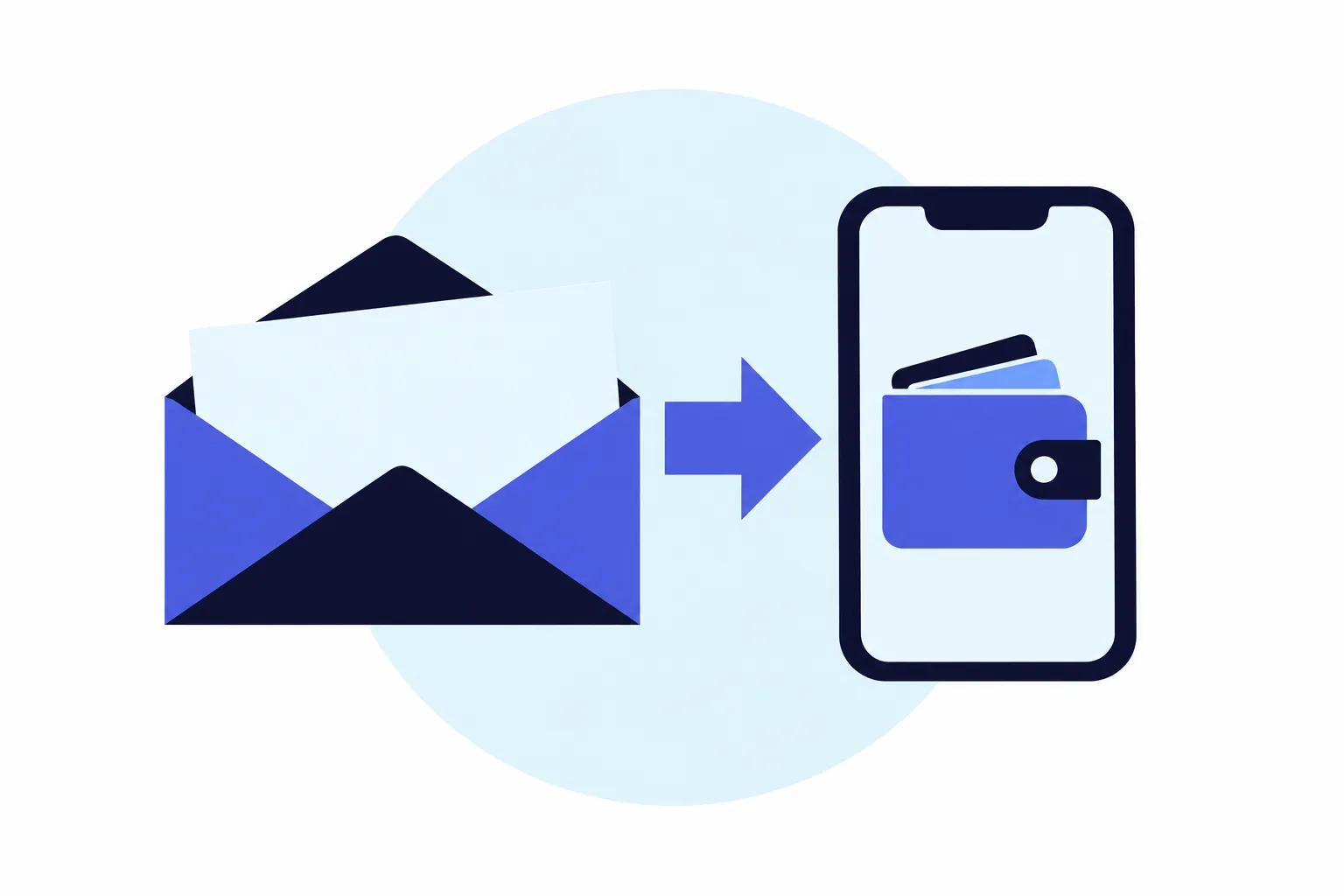
As of October 2026, a year after the September 30, 2025 cutoff set by Executive Order 14247, most federal payments, including Social Security benefits and tax refunds, go out electronically instead of as paper checks. For you, federal money should arrive by direct deposit or a prepaid card, a refund filed without bank details is held rather than mailed, and paying the IRS by check still works for now. Private billers such as utilities set their own rules.
Key takeaways
- The order told Treasury to stop issuing paper checks effective September 30, 2025, "to the extent permitted by law," with exceptions for people without access to banking or electronic payment systems, certain emergency payments, national security or law enforcement, and other cases Treasury sets.
- Social Security says it plans to finish moving all beneficiaries to electronic payments in 2026, but it keeps issuing paper checks to people with no other way to be paid. Exceptions are requested from Treasury at 1-877-874-6347.
- The IRS generally stopped paper refund checks to individuals after September 30, 2025. A return without bank details is still processed, but the refund waits for a response to notice CP53E.
- Mailed checks to the IRS were still accepted under its January 2026 guidance. Paying from a bank account through the IRS is free, and individual access to EFTPS ends in late 2026.
- The order does not govern private billers. Each utility, landlord or lender decides whether it still takes checks.
What it means for you
- Still on a benefit check: switch to direct deposit or Direct Express, or ask Treasury for a waiver.
- No bank account: Direct Express or a low-cost account.
- Expecting a tax refund: put bank details on the return and answer any CP53E notice.
- Paying the IRS: checks are still accepted; individuals using EFTPS must move by late 2026.
- Mailing checks to other billers: check each biller's rules before switching to a bank payment.
What the order requires
Executive Order 14247, "Modernizing Payments To and From America's Bank Account," was signed on March 25, 2025 and published in the Federal Register on March 28. The text on whitehouse.gov directs Treasury to stop issuing paper checks effective September 30, 2025. It also says payments made to the federal government should be processed electronically "as soon as practicable," with no fixed date. Exceptions cover people without access to banking or electronic payment systems, certain emergency payments where electronic delivery would cause undue hardship, national security or law enforcement activities, and other circumstances Treasury sets.
Treasury's August 14, 2025 announcement applied the change to "most" federal payments and said people already paid electronically need to do nothing. Its Fiscal Service later said that existing electronic payment waiver procedures remain in effect until further notice, while it reviews waiver guidance with paying agencies.
Social Security and other benefits
Treasury's Fiscal Service notice says to follow the paying agency's instructions, call the Electronic Payment Solution Center at 800-967-6857 (Monday to Friday, 9 a.m. to 7 p.m. ET), or enroll at GoDirect.gov. In a 2026 notice, Social Security said it plans to complete the transition for all beneficiaries this year. It named mental health concerns or living somewhere remote without access to financial institutions as examples of reasons to request a waiver through Treasury.
SSA's September 19, 2025 update adds these details:
- Beneficiaries can manage direct deposit in their personal my Social Security account. SSI recipients and international beneficiaries can call 1-800-772-1213.
- Temporary checks are no longer available for initial claims.
- A waiver is filed with Treasury at 1-877-874-6347.
- SSA will continue to issue paper checks to people with no other way to receive payments.
The MyMoney.gov federal payments page lists other agency lines, including (800) 827-1000 for Veterans Affairs.
People without a bank account
Direct Express is a Treasury-sponsored debit card for benefit payments. MyMoney.gov and SSA give (800) 333-1795 to enroll. Resources for opening a low-cost account are at FDIC GetBanked and MyCreditUnion.gov. Veterans and caregivers can use the Veterans Benefits Banking Program, according to MyMoney.gov.
Small businesses
Treasury tells government vendors to update their SAM.gov registration with valid bank account information. The help desk is 866-606-8220, Monday to Friday, 8 a.m. to 8 p.m. ET.
Helping a relative switch
To help, start with the paying agency or the person's my Social Security account. MyMoney.gov advises checking any request about federal payments by contacting the agency through a website or phone number you already know is real.
Refunds and payments to the IRS
The IRS's questions and answers on the order, last updated January 27, 2026, say it generally stopped issuing paper refund checks to individuals after September 30, 2025, with limited exceptions. Giving direct deposit details is voluntary but is the primary method.
What happens with no bank details
The IRS still accepts and processes the return. It mails notice CP53E to the last-known address when banking information is missing or a direct deposit was rejected. You then have 30 days to give bank information or explain why you cannot, through the Individual Online Account. Where's My Refund shows related messages. IRS employees cannot take deposit details by phone or in person. With no response and no other problems, the refund is released as a paper check after six weeks; the IRS does not say when that period starts.
Why the timing matters
The IRS's modernization page, updated September 25, 2026, says direct deposit refunds are issued in less than 21 days in most cases, while refunds by mail may take six weeks or longer. The table applies those typical figures to an invented date.
| Illustrative example: return accepted February 10, 2027 | Timing under the IRS figures |
|---|---|
| Refund by direct deposit | Usually under 21 days, so before March 3, 2027 |
| Refund by mailed check | Six weeks or longer, so March 24, 2027 or later |
| Typical gap | About three weeks or more |
The dates are hypothetical. The 30-day window to answer a CP53E notice and the six-week default check are separate clocks.
Paying the IRS
According to the IRS questions and answers, mailed cash, checks and money orders are still accepted and processed. The agency plans to reduce reliance on paper over time, keeping exceptions for hardship and legal or procedural situations. The modernization page says that until further notice, existing forms and procedures should be used for payments. The IRS payments page lists these options:
- Bank account payments through your Individual Online Account or Direct Pay, which are free.
- Debit or credit card and digital wallet payments, which carry fees.
- Check or money order.
Electronic payments immediately generate a confirmation number and receipt, the Q&A says. Individuals have not been able to enroll in EFTPS since October 17, 2025, and EFTPS options for individuals end in late 2026, so current individual users need to move to the online account or Direct Pay.
Businesses face a stricter line: federal tax deposits must be electronic, and non-electronic deposits may be penalized unless the business shows reasonable cause.
Paying other bills electronically
The order covers only money paid by and to the federal government. Whether a utility, landlord or lender still takes mailed checks, and by what date a payment must arrive, appears on its statement or payment page.
The CFPB describes an ACH transaction as an electronic transfer between banks and credit unions. A biller may let you pay by giving it your routing and account number, and some bank and credit union online bill payment services also use ACH. The CFPB notes that your bank may cap transfer amounts or charge a fee per transaction. An ACH payment can also be returned for nonpayment if the account lacks enough money.
When moving a bill off paper checks:
- Confirm on the biller's own site which methods it accepts and whether a card payment carries a fee, as it does at the IRS.
- Make the first electronic payment well before the due date and save the confirmation.
- Keep the check option until that payment shows as posted on the biller's account.
Why Treasury is dropping checks
The IRS Q&A says electronic payments can be posted faster, have lower processing costs and reduce errors. SSA's 2026 notice cites Treasury figures putting the average cost of printing a check at $3.07, about 20 times more than automated payments. Treasury's Fiscal Service also says paper checks are more than 16 times more likely than electronic payments to be lost, stolen, altered or delayed, without publishing a method, and a February 27, 2023 FinCEN alert counted more than 350,000 suspicious activity reports of potential check fraud in 2021 and more than 680,000 in 2022.
Frequently asked questions
Do I lose my refund if I leave out my bank details?
No. The IRS processes the return and sends notice CP53E. Once you provide bank information or qualify for an exception, the refund is released right away. With no response and nothing else wrong with the return, a paper check follows after six weeks.
Will the IRS call me to take my direct deposit information?
According to the IRS, no. It contacts people about missing bank details only by mail to the last-known address, not by phone or text.
Does the change apply to refunds owed to a deceased person?
As of the IRS's January 2026 guidance, nothing had changed yet for deceased taxpayers, and checks continue under current practice.
Can a prepaid card or payment app receive federal deposits?
MyMoney.gov says some mobile apps and prepaid debit cards can receive federal direct deposit if they provide a routing and account number. Confirm with the provider which numbers to use before changing the deposit.
How do I stop an automatic payment from my bank account?
The CFPB's steps for stopping automatic payments:
- Tell the company you are revoking its permission, and tell your bank or credit union the same, following up each in writing.
- Your bank may suggest a stop payment order, which usually carries a fee.
- Keep a record of your requests and their dates.
Stopping automatic payments on a loan does not end the debt.
A short checklist for this month
- If you or a relative still receive a federal benefit check, enroll at GoDirect.gov or call 800-967-6857. If switching is not possible, ask Treasury about a waiver at 1-877-874-6347.
- With no bank account, compare Direct Express with a low-cost account.
- Add routing and account numbers to your next return, and answer any CP53E letter within 30 days.
- If you pay the IRS through EFTPS as an individual, set up the online account or Direct Pay before late 2026.
- Check each biller's payment page before mailing a check, and keep the old method until the first electronic payment posts.
This article is educational and not personal financial or tax advice. Rules and phone numbers can change.
Sources
- Federal Register, EO 14247
- White House, EO 14247 text
- Treasury, August 14, 2025
- Fiscal Service, Paper Checks Are Going Away
- Fiscal Service, options for check recipients
- SSA, full transition notice (2026)
- SSA blog, September 19, 2025
- MyMoney.gov, federal payments
- IRS, EO 14247 Q&A (January 27, 2026)
- IRS, modernizing payments (September 25, 2026)
- IRS, Payments
- CFPB, What is an ACH?
- CFPB, stopping automatic payments
- FinCEN alert, February 27, 2023