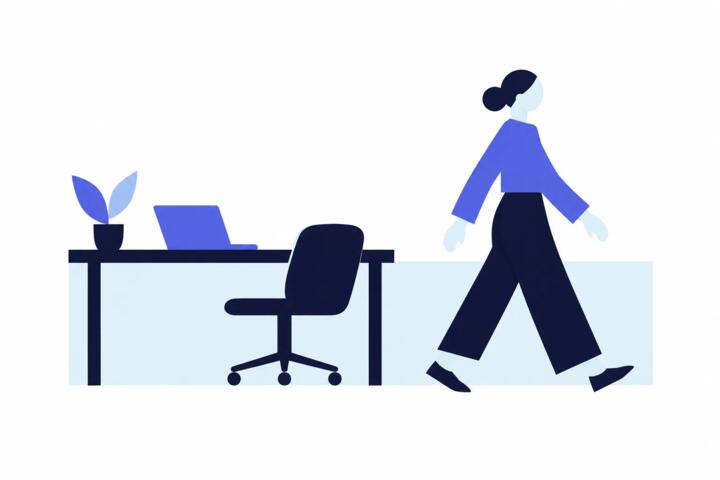
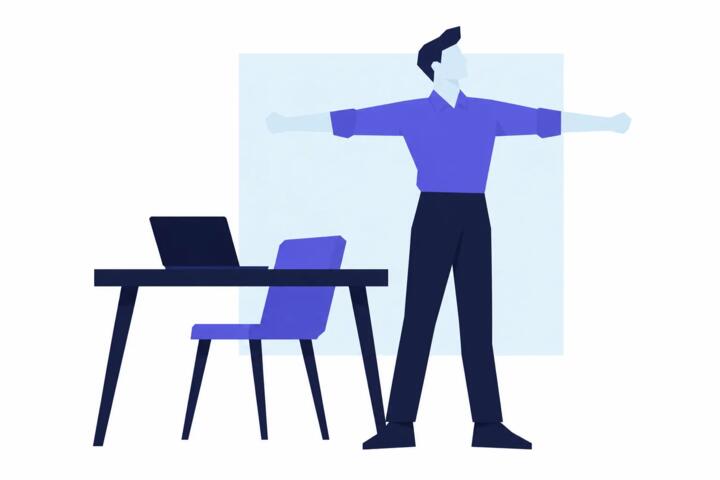
A June 2026 study of 11,484 adults favors a 5-minute walk every hour. Here is what that means at your desk. The WHO and US guidelines both tell adults to sit less, and the WHO says light movement in place of sitting counts. A small crossover trial found that only a 5-minute walk every 30 minutes lowered post-meal blood sugar, while blood pressure fell with every schedule tested, though a meta-analysis found no blood pressure effect. This article sorts the evidence by what it can and cannot show. It explains why a sit-stand desk cuts sitting but standing is a weaker break than walking, and why the "exercise snack" mortality findings are observational. It also works through the minutes and an upper-bound step count for an 8-hour desk day.
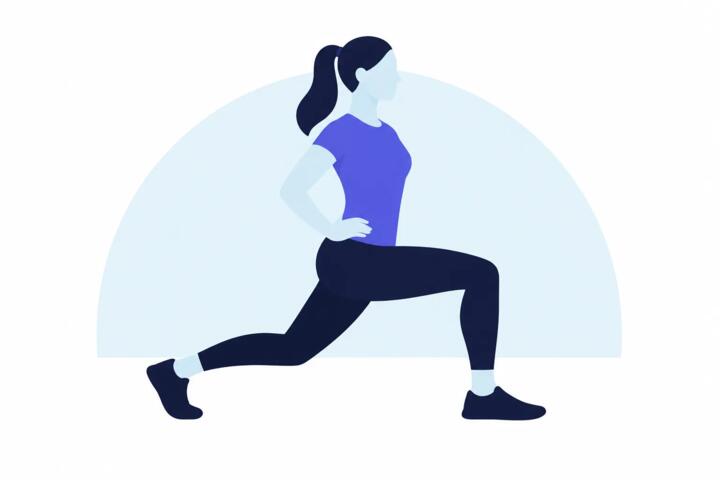
A 2026 expert consensus backs warm-ups for readiness, not instant injury protection. Warm-up advice has moved from long static stretches toward dynamic, activity-specific movement, and the evidence behind that shift is more limited than many articles suggest. This explainer reports what a 2016 stretching review, a 2010 meta-analysis, a 2008 trial in teenage footballers and 2026 studies actually found, with the numbers and the populations studied. It then splits the practical takeaways by situation, from runners and lifters to older adults and people exercising in the cold, and ends with a short checklist for your next session.
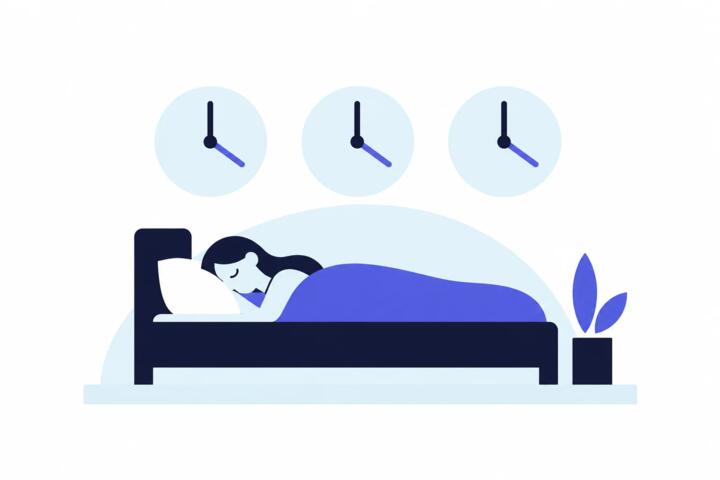
Irregular sleep times carry their own health risk, but they do not cancel the need for seven hours of sleep. An August 2026 study that tracked 95,819 people for about 20 months found chronic irregular sleepers had 46% higher odds of high blood pressure, one UK Biobank study found regularity predicted death slightly better than sleep length, and others linked irregular sleep to diabetes and heart risk even in people sleeping 7 hours or more. Duration still matters too. This explainer covers the Sleep Regularity Index with an illustrative weekly example, social jet lag, what weekend catch-up sleep can and cannot do, the 1-hour window that the most regular sleepers kept, and what changes for shift workers, travelers, teens, new parents and people with insomnia.
A 2026 US study links caffeine within 8 hours of bed to short sleep, but official daily limits have not moved. A survey analysis of more than 37,000 adults and a review of 32 sleep-EEG studies, both from 2026, point to the day's last dose: moderate amounts within eight hours of bed went with shorter sleep, and caffeine pushed sleep toward a lighter pattern. Meanwhile the FDA's 400 mg figure for most adults and ACOG's under-200 mg advice in pregnancy, reaffirmed in 2026, stand. The article sets out which trial results support which bedtime cutoff, works through a 4 p.m. pre-workout scoop against the 13.2-hour gap one meta-analysis suggests, lists caffeine that rarely gets counted (pain relievers, dark chocolate, decaf) and names who clears it slowly.
Minnesota's 15-minute rest breaks began in 2026; here is what short breaks do and what the law requires. Short pauses at work are back in the news thanks to Minnesota's new rule and new 2026 studies. The evidence is clearer on how you feel than on how much you get done. A pooled analysis of 22 study samples found small gains in vigor and less fatigue, but no overall performance effect, while older NIOSH field trials found that added breaks did not cut output. On the legal side, the article covers the federal rule on paid short breaks, a table of state rest-period rules with their conditions, and pumping breaks under the PUMP Act, then ends with a short checklist for workers and managers.
The new federal guidelines set a protein goal of 1.2–1.6 g/kg and sideline the MyPlate image. Released on January 7, 2026, the 2025–2030 Dietary Guidelines for Americans keep the 10% saturated fat limit while telling people to include full-fat dairy, avoid highly processed foods and hold added sugar to 10 grams per meal. Here is what differs from the 2020–2025 edition, where the American Heart Association, the American Society for Nutrition and the Center for Science in the Public Interest agree and object, and how the numbers turn into a plate, a label check and a protein target, with a worked example for a 70 kg adult and a saturated fat budget.
Two medical groups now say to power down before bed and charge the phone outside the bedroom. In January 2026 the American Academy of Pediatrics told families to keep screens off for the hour before bed and devices out of bedrooms, and in February the American Academy of Sleep Medicine gave adults similar advice alongside a survey in which half of US adults said they use a screen in bed every day. Here is that advice beside the evidence: a lab study where hours of tablet reading delayed falling asleep by about 10 minutes, a trial where Night Shift made no difference, and studies tying in-bed screen time to shorter sleep, split by reader situation and ending with a plan for tonight.
CDC data show 3 in 10 US adults sleep under 7 hours; here's what that means for the afternoon slump. A CDC National Center for Health Statistics brief published in April 2026 reports that 30.5% of adults slept less than 7 hours on average in 2024. This article sorts out what has official guidance behind it (sleep duration, caffeine, symptoms that need a clinician) from what rests only on individual studies: the built-in midafternoon dip, nap length (10 minutes versus 30) and claims about high-carbohydrate lunches. It also includes a sleep-debt example, an age table and a short checklist.
The newest APA stress survey links stress to loneliness; here is what evidence says helps. The American Psychological Association's Stress in America survey, published in November 2025, found that people who see societal division as a major stressor are more likely to feel isolated, and that stress over misinformation and AI rose from the year before. This article sets those findings beside what NIMH and CDC say stress does to the body, what NCCIH and a major meditation meta-analysis say about mindfulness, relaxation and yoga, and how strong that evidence really is. It sorts the takeaways by reader situation, lists the warning signs that call for professional help, and gives the 988 Lifeline details.
New step research finds most of the measured benefit arrives before 10,000 steps a day. A study published online on September 8, 2026 found the lowest risk of early death at 7,500 to 10,000 steps, and a 2025 meta-analysis found several benefit curves flattening at 5,000 to 7,000. This piece sets out what each study measured and where it falls short, how much 2,000 extra steps is in minutes and miles, and how far off a phone or wrist tracker can be in daily life. It also covers what the federal activity guidelines say about steps. The findings are split by situation: mostly sitting, already near 7,000, age 60 and over, phone or watch, and living with a health condition. A short checklist for using the counter you already own closes the piece.